What is crowdfunding?
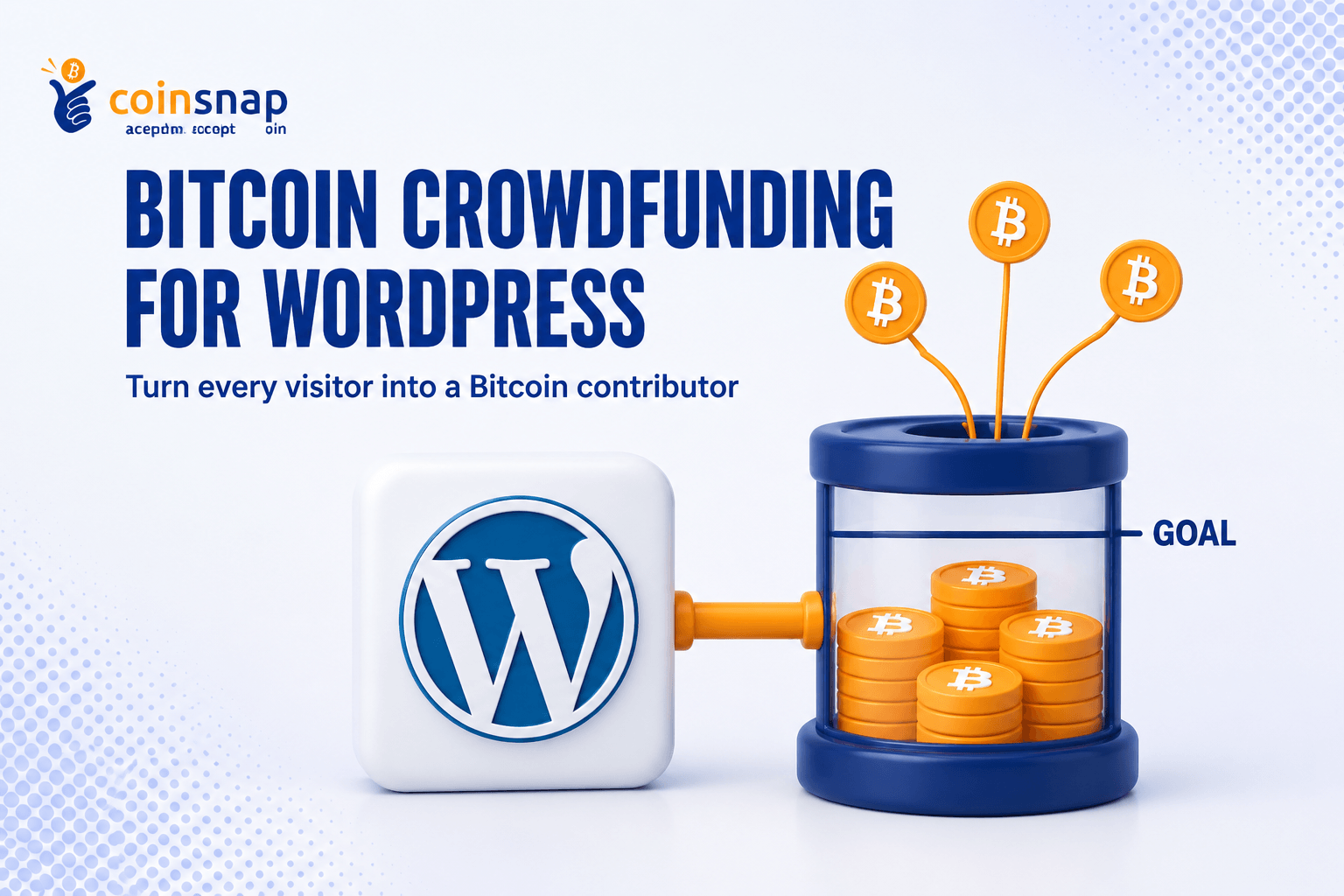
 The Coinsnap Bitcoin Crowdfunding plugin enables WordPress website owners to collect Bitcoin and Lightning contributions for projects, campaigns or personal causes directly through their own website.
Campaign creators can define a funding goal, add the crowdfunding form via shortcode and receive payments in the wallet connected to their Coinsnap account or through their own BTCPay Server.
Crowdfunding refers to the financing of a project by a large number of individual supporters – usually via the Internet. People donate or invest small amounts in order to achieve a larger goal together. There are different types:
- Donation-Based: pure donations without consideration (e.g. for charitable purposes)
- Reward-based: Donors receive something in return, e.g. a product
- Equity-Based: Investors receive company shares
- Lending-Based: Participation via repayment models
Crowdfunding is a billion-dollar market worldwide. According to data from Statista, the global crowdfunding volume in 2023 was over 12 billion USD – with a continuing upward trend.
This guide explains how Bitcoin crowdfunding works, how to set up the Coinsnap plugin and how it differs from traditional crowdfunding platforms.
What is Bitcoin crowdfunding?
Bitcoin crowdfunding is a modern variant of classic crowdfunding – with the special feature that supporters do not pay in euros or dollars, but in Bitcoin. The advantages are obvious:
- The amounts are directly sent to the wallet of the project initiator
- It does not need any middlemen or banks
-
When the plugin is used with a Coinsnap account, Coinsnap does not require KYC for contributions paid directly to the connected Bitcoin or Lightning wallet
- External fiat or bank payout services and other payment providers may have their own KYC or KYB requirements
- Global reach: Anyone with a Bitcoin wallet can donate
- With providers such as Coinsnap, payments are credited immediately via the Lightning Network
- Ideal for micro-payments – unlike FIAT money orders, no amount is too small to be credited in the Lightning Network
- The amount that can be sent via Lightning may depend on the minimum and maximum limits or available payment capacity of the Lightning wallets involved. If the wallets support the amount, Coinsnap credits the full contribution amount
- For larger contributions, or whenever the supporter or merchant prefers not to use Lightning, Coinsnap offers on-chain Bitcoin as an alternative payment route. The payment can be sent directly to the merchant’s configured hardware wallet, giving both parties an additional level of choice and security
Technically, Bitcoin crowdfunding often runs via plugins or platforms that provide a donation form with a QR code and donation targets.
Why is Bitcoin crowdfunding particularly interesting for WordPress?
For website operators
With a market share of over 40%, WordPress is the most widely used CMS in the world. For bloggers, NGOs, creators and small companies, it is the ideal tool for bringing content and projects online quickly and flexibly.
With Bitcoin crowdfunding, your own content or project can be financed directly by readers and fans – without third-party providers and without dependence on payment services.
For beginners & people with specific concerns
If you don’t have a website, you can start a WordPress.com blog for free in just a few minutes and use it, for example, to collect Bitcoin for:
- medical treatment
- an anniversary trip
- a celebration (milestone birthday, wedding, christening, etc.)
- a social concern
This also works without prior technical knowledge–e.g. with the Coinsnap plugin which can be installed directly in WordPress with just one click.
Bitcoin crowdfunding versus FIAT crowdfunding
Crowdfunding is nothing new–unlike Bitcoin crowdfunding. But why should you go for Bitcoin crowdfunding instead of fiat crowdfunding? In the table below you can see some of the key differences–and advantages–of Bitcoin crowdfunding versus fiat crowdfunding:
| Bitcoin crowdfunding | Classic crowdfunding (e.g. GoFundMe, Kickstarter) |
| Provider-dependent processing fees; no traditional card-processing fees. |
Platform fees up to 10% |
| Immediate crediting to your own wallet | Payouts often delayed |
| Globally accessible – no currency barriers | Often country-specific restrictions |
| No risk of chargebacks | Chargebacks possible |
| No KYC/verification necessary | Complex registration and verification |
| Censorship resistant | Projects can be rejected or deleted |
In summary, Bitcoin crowdfunding is ideal for small campaigns (target e.g. €200) that would not be possible with a large bureaucratic and cost overhead.
Bitcoin crowdfunding is also ideal for crowdfunding campaigns on topics that fiat payment service providers may not support (issue of censorship).
And of course, Bitcoin crowdfunding is unbeatable if your crowdfunding campaign relies on raising many small amounts (micro-payments) to achieve its goal – raising very small amounts of less than one Euro, for example, is not feasible with conventional fiat crowdfunding solutions!
Can I Receive Bitcoin Crowdfunding Donations in Euros?
Yes. With Coinsnap, supporters can pay your crowdfunding campaign in Bitcoin, while Coinsnap’s fiat settlement partners, DFX or Bringin, automatically convert the payments into euros and deposit the funds into your bank account. This allows you to benefit from fast, global Bitcoin payments without holding or managing Bitcoin yourself.
Cost consideration – what do you get from the donation? Bitcoin versus FIAT
Let’s be honest – crowdfunding is all about one thing: money. And that’s why we now want to look at what percentage of your donors’ money actually goes NET to your crowdfunding fund. To do this, let’s first take a look at the fees:
Overview of fees (typical values)
1. Platform fees
- GoFundMe charges no platform fee for fundraising campaigns but instead proposes a voluntary contribution to donors.
- Kickstarter charges a 5% platform fee.
- Indiegogo charges a 5% platform fee.
- Betterplace charges no platform fee for charitable projects but prominently encourages donors to leave a voluntary contribution.
2. Payment service provider fees (PayPal, Stripe)
- PayPal and Stripe typically charge approximately 2.9% plus €0.30 per transaction. International payments or currency conversions can add another 1% to 2% in fees.
We will now look at what this means using the example of a donation of €100.
Example of a net payout from a donation of €100
| Platform | Platform fee | Payment fee | Total deduction | Payout to project |
| Kickstarter | 5 % | 3-5 % | 8-10 % | 90-92 € |
| Indiegogo | 5 % | 3-5 % | 8-10 % | 90-92 € |
| GoFundMe | 0 % | 2,9 % + 0,30 € | ~3,2 % | ~96,80 € |
| Betterplace | 0 % | 2,5-3 % | 2,5-3 % | ~97 € |
Note: With PayPal and Stripe there may be additional fees for currency conversion or country limits. For a donation of €10, for example, the fixed costs can account for a disproportionately large share.
In practice, therefore, depending on the platform and payment method, usually only 90% to 92% of the donation amount actually reaches the project or campaign. And especially with smaller donations or international payment transactions, the net percentage can drop even more significantly!
Bitcoin-based solutions such as Coinsnap largely avoid all these deductions – for example, Coinsnap only charges a 1% processing fee for payments processed through Coinsnap.
That means: With a Bitcoin crowdsourcing plugin like Coinsnap 100% of any donation ends up directly in your wallet!*
For what purposes can Bitcoin crowdfunding be used?
Bitcoin donations can be used in a variety of ways – here are some practical examples:
- Private occasions
Birthdays, weddings, surprise gifts - Creative projects
Book publishing, album production, art - Social emergencies
Medical aid, school materials, crisis support - Community initiatives
Playground construction, environmental projects, clubs - Content financing
YouTube series, podcasts, blog articles - Charity
Support good NGOs / activists whose goals you want to promote, such as Bitcoin Zambia (an African education initiative), or a family you know in Ukraine…
Coinsnap Bitcoin crowdfunding has a huge advantage over all fiat crowdfunding platforms – 100% of each donation are credited to your wallet and available for the purpose of the campaign! (Coinsnap’s 1% transaction fee is deducted separately from your prepaid balance.)
In short, with Bitcoin crowdfunding there are practically no limits to your ideas and creativity: Whatever you want to finance – if you have a good idea and can describe it well to your readers / visitors / followers, then you can use Bitcoin crowdfunding to collect Bitcoin for it.
No matter what it’s about – if other people are interested, you can offer them an easy, fast and secure way to get involved with Bitcoin crowdfunding!
Provider comparison: Bitcoin crowdfunding for WordPress
The Coinsnap Bitcoin Crowdfunding plugin can be connected either to a Coinsnap account or to the user’s own BTCPay Server. Fees, account requirements and payment processing depend on the selected operating mode. Conditions of other providers such as OpenNode or Tallycoin are not Coinsnap conditions.
There is currently only one dedicated Bitcoin crowdfunding for WordPress plugin in the official plugin directory – Coinsnap Bitcoin Crowdfunding. However, there are various providers that offer external solutions, which then have to be integrated manually. Some examples are these:
| Solution Provider | Payment methods | Fees | WP integration | GDPR-compliant | Special features |
| Coinsnap | Bitcoin (Lightning + on-chain), FIAT payout to bank account optional | 1 % | Official WP plugin | Yes | Target amount, multi-amount, shout-outs |
| BTCPay Server | Bitcoin (on-chain + Lightning) | 0 % | Manual integration | Yes | Open source, high control |
| Tallycoin | Bitcoin (on-chain) | 0 % | Externally integrated | Yes | Profile pages, community approach |
| OpenNode | Bitcoin + fiat payout | ~1 % | Restricted | Partially | Fiat conversion, centralized |
Excursus: legal framework for crowdfunding in Europe
In most countries of the European Community, collecting money as part of a simple crowdfunding campaign – e.g. for a private gift, a creative idea or a social project – is generally permitted as long as no consideration is promised and there is no intention to make a profit exists. In this case, it is legally a case of gifts which do not require special authorization.
Important legal information:
- Donations without consideration (donation-based crowdfunding) are unproblematic as long as they are made voluntarily and without any contractual obligation.
- Who regularly or commercially collects funds (e.g. for a company) could be subject to the Asset Investment Act or other financial market regulations.
- For charitable donations with a donation receipt you need the status of non-profit status from the tax office – purely private individuals are not allowed to issue tax-deductible donation receipts.
- For higher individual donations a gift tax may be due – this is the responsibility of the recipient, although allowances apply (e.g. €20,000 for gifts from friends).
- It is recommended to maintain transparency about the purpose of the crowdfunding and to use the funds for a specific purpose as described.
As long as you are a private individual or initiative without commercial intent Bitcoin donations for a specific cause–for example via WordPress and the Coinsnap plugin–you are operating within a legally permissible framework in most of Europe. However, individual tax or legal advice is advisable in the event of uncertainties or larger amounts.
Conclusion
Bitcoin crowdfunding for WordPress is ideal for collecting Bitcoin quickly, cost-effectively and without any technical or bureaucratic effort.
Bitcoin crowdfunding for WordPress is the perfect solution for anyone who wants to raise financial support in the form of Bitcoin quickly and easily without any prior technical knowledge, bureaucratic hurdles or complicated third-party services.
People with a specific cause – be it a private project, a social project or a creative goal – benefit in particular from the simple setup and direct payout to their own wallet.
The Coinsnap plugin makes implementation extremely easy: a campaign is live in just a few minutes, donations can be accepted immediately, and supporters from the immediate environment or the online community can contribute to the success of the project without any barriers.
So if you are looking for a modern, independent and accessible crowdfunding solution, Bitcoin Crowdfunding for WordPress offers a clear path to your goal.
Bitcoin crowdfunding for WordPress in practice using the example of Coinsnap
What does the plugin do?
The Coinsnap Bitcoin Crowdfunding Plugin for WordPress enables website operators to collect Bitcoin donations for projects, campaigns or personal causes directly on their own WordPress site. The special feature: The contributions are transferred in the form of Satoshis (the smallest unit of Bitcoin) directly and without detours to the wallet of the creator of the campaign – either via the Bitcoin Lightning Network or as a classic on-chain transaction. Processing is completely decentralized and without the involvement of third-party providers, banks or payment service providers.
What does the user interface offer?
Users can make their Bitcoin donations conveniently using a QR code and send a public shout-out or a personal message if they wish. These donor messages can optionally be displayed live on the website – a great way to create transparency and community. The donation forms are integrated using shortcodes and can be flexibly placed anywhere within the WordPress website – whether in pages, blog posts or widgets.
What do you need to use Coinsnap Bitcoin Crowdfunding?
All you need to use the plugin – in addition to a WordPress site – is a Coinsnap account or your own BTCPay server. A Lightning wallet or a wallet address is sufficient to receive donations. The plugin is fully GDPR-compliant, as no unnecessary data is stored, and is available free of charge in the official WordPress plugin directory.
How do I install and configure Coinsnap Bitcoin Crowdfunding?
The configuration is particularly beginner-friendly: After installation from the WordPress plugin directory, the connection to Coinsnap or your own BTCPay server can be established (see installation instructions).
All campaign parameters can then be set individually: The desired target amount in Satoshis, three preset donation amounts, the description of the project, a welcome text and an optional thank you message. In addition, fields for entering the name, e-mail address and personal message can be activated. If you wish, you can also use the shoutout function, which displays public donor messages directly on the website.
The form is easily integrated via an automatically generated shortcode that can be inserted anywhere on the website. Visitors then see a compact, modern donation form with a progress bar, countdown (if desired) and donation options. After scanning the QR code and confirming, the donation amount is transferred directly to the connected wallet of the campaign creator – quickly, securely and without detours.
Can I also use the plugin with my BTCPay server?
Coinsnap offers two operating modes: In simple mode, the connection is made via a Coinsnap account, which requires no prior technical knowledge. In advanced mode, tech-savvy users can connect the plugin to their own BTCPay server, giving them maximum independence and control over all aspects of the payment processing.
Start your first Bitcoin crowdfunding campaign now
With Coinsnap Bitcoin Crowdfunding you can start today to collect Bitcoin for your projects and causes from your followers and visitors.
You only have to follow three steps and you can launch your first Bitcoin crowdfunding campaign on your WordPress website in half an hour at the latest:
1. set up a Coinsnap account
2. install & link plugin
3. Configure & place campaign
Go to the Coinsnap Sign In page and enter your email address. We will send you a 6 digits code, that you will enter on Coinsnap.io. And your Coinsnap account is active!
Search for Coinsnap Bitcoin Crowdfunding in the WordPress backend under Add plugin, click on Install, and then on Activate. Open the plugin settings and enter the store ID and API key that you can find in your Coinsnap account. Done.
Go to Bitcoin Crowdfunding in the WordPress dashboard on the left, click on Crowdfundings and then on New Crowdfunding. Then fill out the form fields, copy the displayed shortcode where you want to run the campaign, and all deposits will be credited directly to your Lightning Wallet.
*Coinsnap’s 1% transaction fee is deducted separately from the prepaid credit balance in your Coinsnap account.
Frequently asked questions about Coinsnap Bitcoin crowdfunding
When the plugin is used with a Coinsnap account and contributions are paid directly to the connected Bitcoin or Lightning wallet, Coinsnap does not require KYC verification. External fiat-conversion or bank-payout services may require KYC or KYB. Other providers apply their own verification requirements.
Coinsnap currently charges a 1% processing fee for successful crowdfunding payments processed through Coinsnap. The fee is deducted from the campaign owner’s prepaid Coinsnap credit, allowing the full contribution amount to be forwarded to the configured wallet. Bitcoin network fees and costs charged by external services, where applicable, are separate.
Payments processed through a Coinsnap account are sent directly to the Bitcoin or Lightning wallet configured by the campaign owner. On-chain payments can be directed to a configured Bitcoin hardware wallet. Coinsnap does not hold the contributed funds.
Yes. The plugin supports fast Lightning payments as well as on-chain Bitcoin transactions. The payment options displayed to supporters depend on the campaign owner’s configuration.
The amount that can be transferred via Lightning may depend on the minimum and maximum limits and available payment capacity of the Lightning wallets involved. If the wallets support the amount, Coinsnap forwards the full contribution. Coinsnap does not impose a general €1,000 limit on Lightning contributions.
The supporter can use an on-chain Bitcoin payment instead. This provides an alternative payment route for larger contributions or whenever the supporter or campaign owner prefers not to use Lightning. The payment can be sent directly to the campaign owner’s configured Bitcoin hardware wallet.
No. Supporters do not need to register with Coinsnap. They only need a compatible Bitcoin or Lightning wallet to scan the payment request and authorize the contribution.
Yes. Campaign owners can define both a funding goal and an end date for their campaign. They can then add the crowdfunding form to a WordPress page using a shortcode. Contributions received through the form are counted toward the campaign goal.
 Bitcoin donations are voluntary payments in the cryptocurrency Bitcoin that are made to support websites, projects or people. Instead of traditional currencies (fiat) such as euros or dollars, donors use Bitcoin to “reward” a blogger for a helpful article, for example, or to support an influencer for their content.
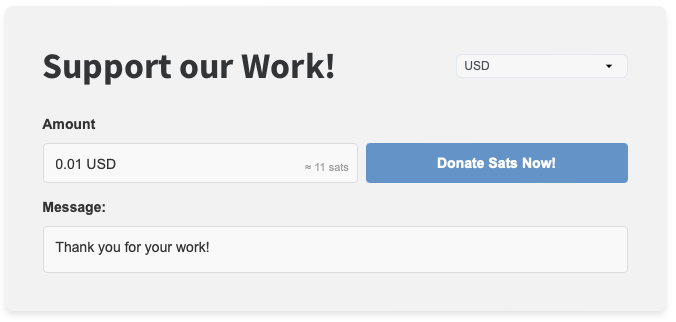 This is the classic donate button. In its simplest form, it is a “Donate Bitcoin” button that can have a small input field for the amount. The visitor can usually enter the desired amount here (or there is a preset default) and optionally leave a message for you. After clicking on “Donate”, a QR code or payment link is generated, which the user can pay with their wallet. This model is suitable if you want to keep it as simple as possible ideal for sidebar buttons or at the end of blog posts with the call “If you liked the article, I’d appreciate a Bitcoin donation!”.
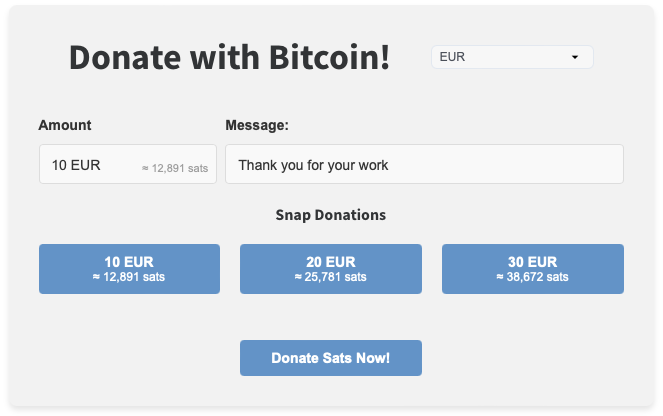 This is a donation form that three predefined amounts to choose from. For example, you could offer €5, €10, €20 in sats to choose from (you define the exact values in the plugin setting). The user then simply clicks on one of the buttons instead of entering an amount themselves. Of course, a message field can also be included here. Multi-Amount is suitable for giving donors an orientation many then opt for the average value. It lowers the cognitive hurdle (“How much should I give?”). Technically, the plugin generates three buttons next to each other. As soon as the user clicks on one, the payment process runs in exactly the same way as with the simple model. This format is ideal for donation pageswhere you ask for support and provide suggestions straight away.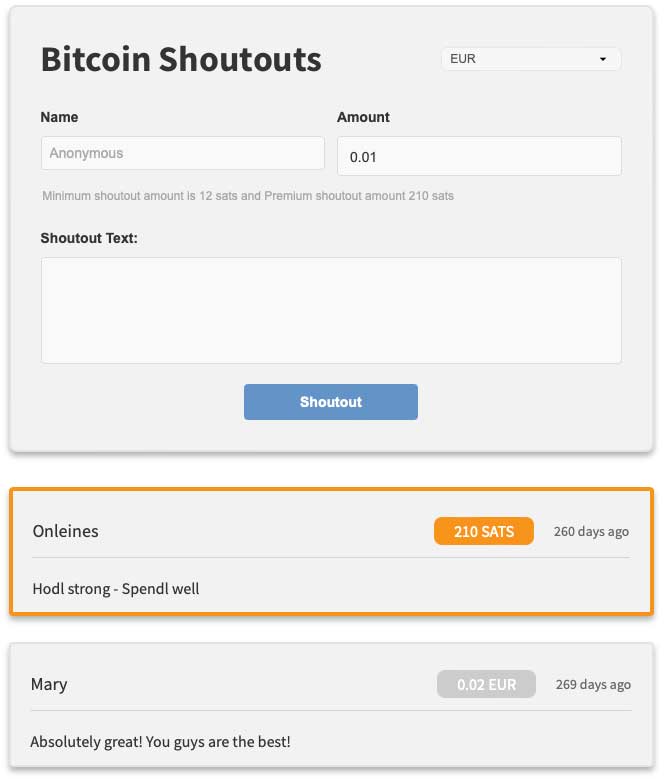


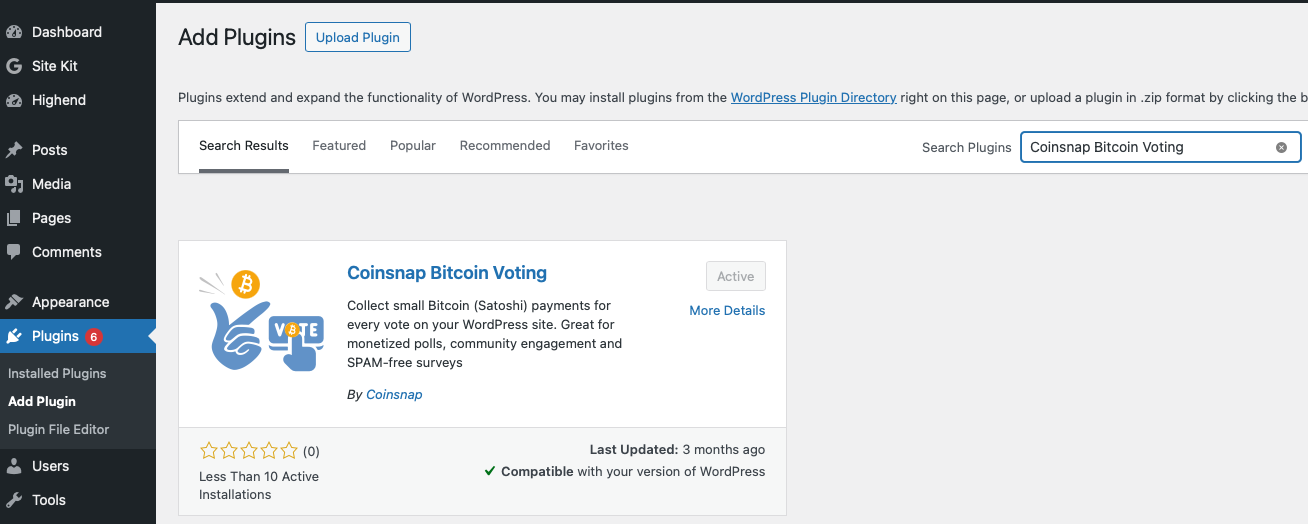
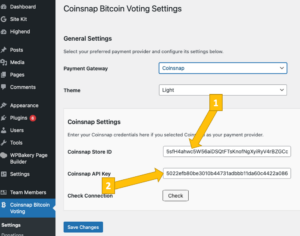 Connect the plugin with your wallet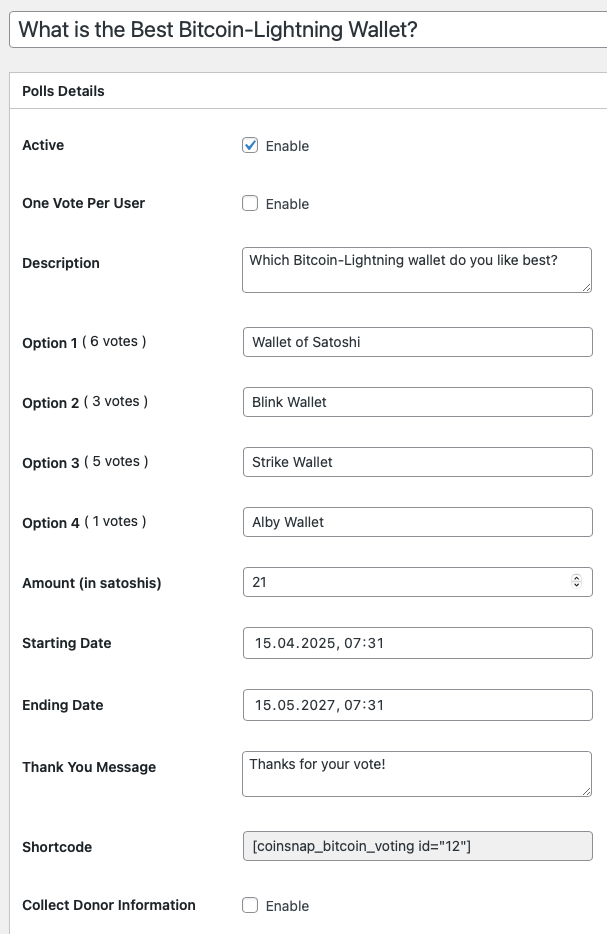
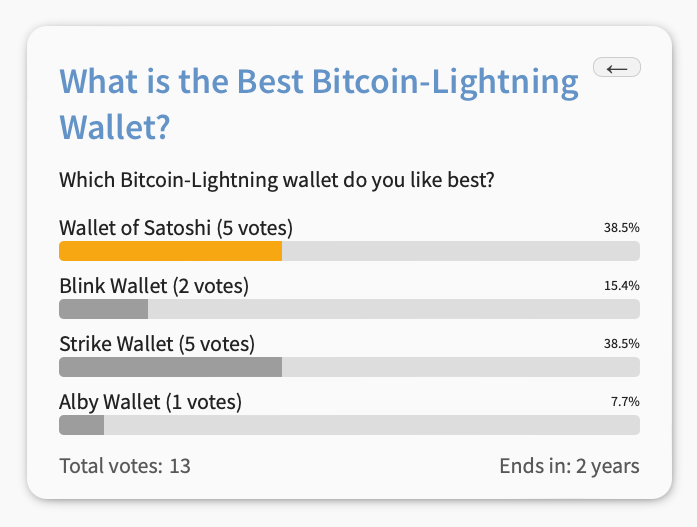
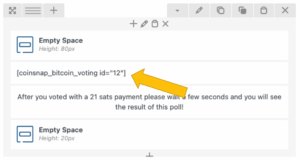 Place the poll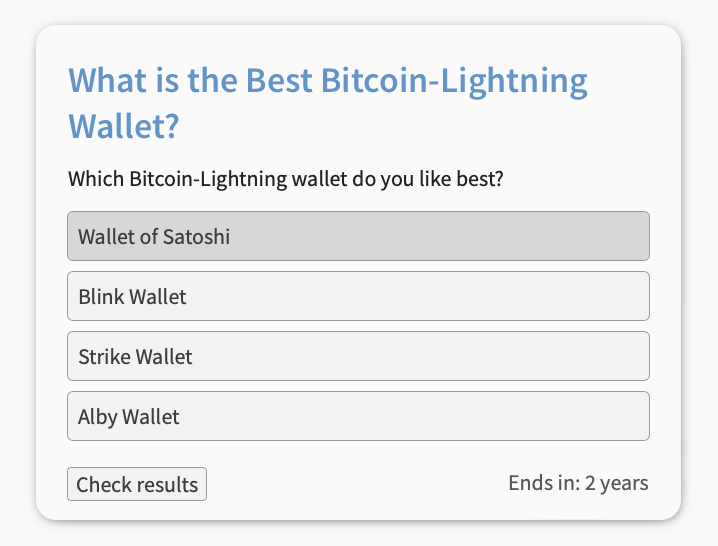

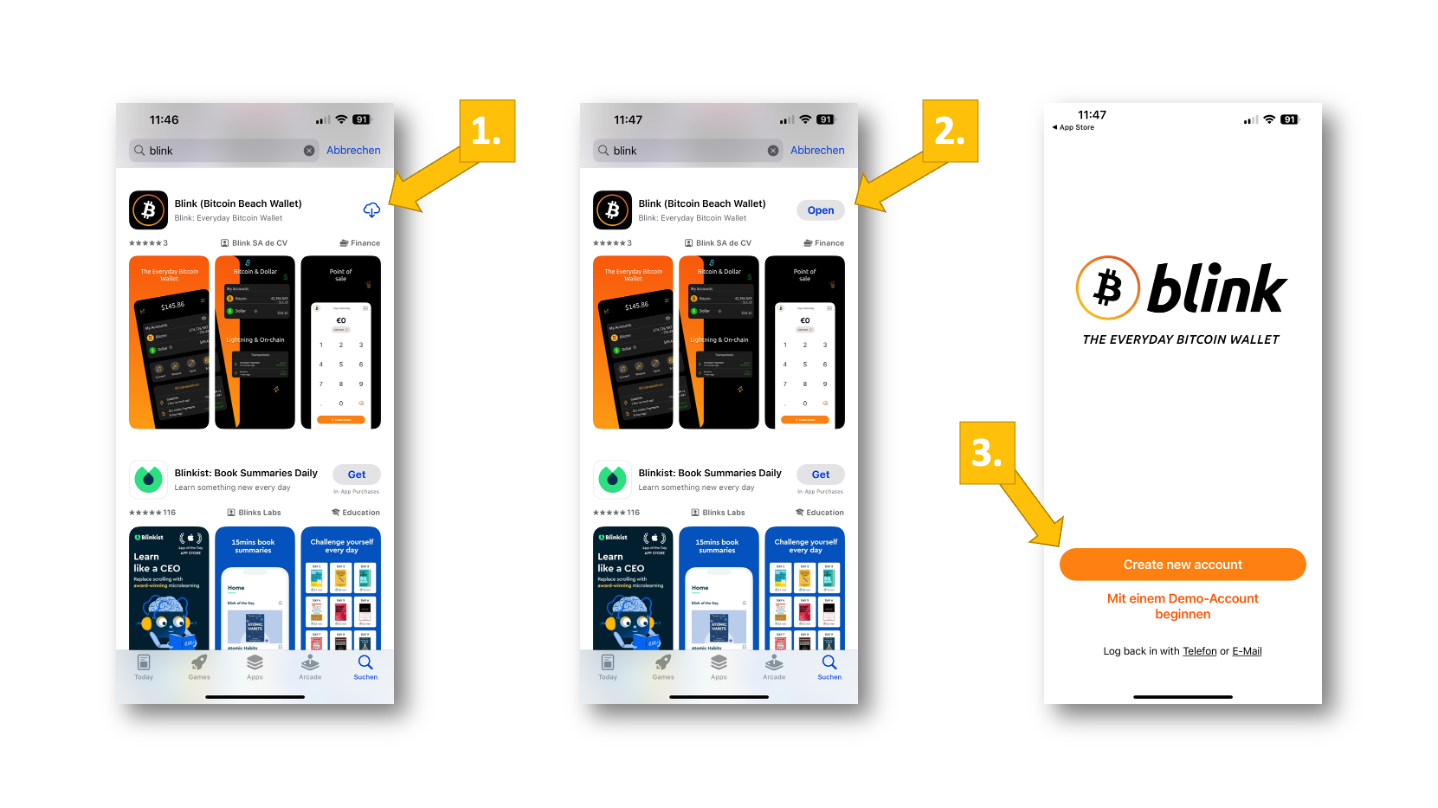
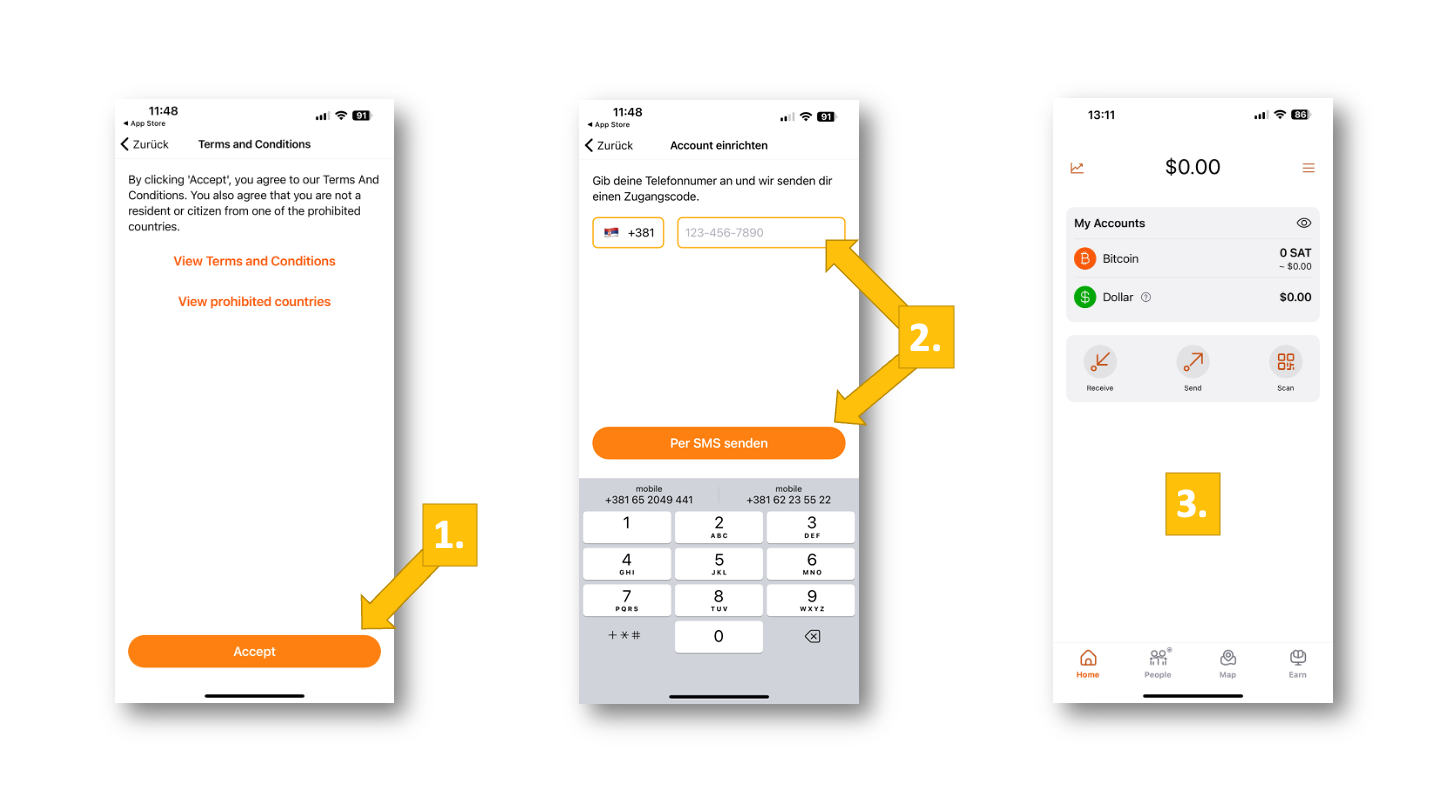
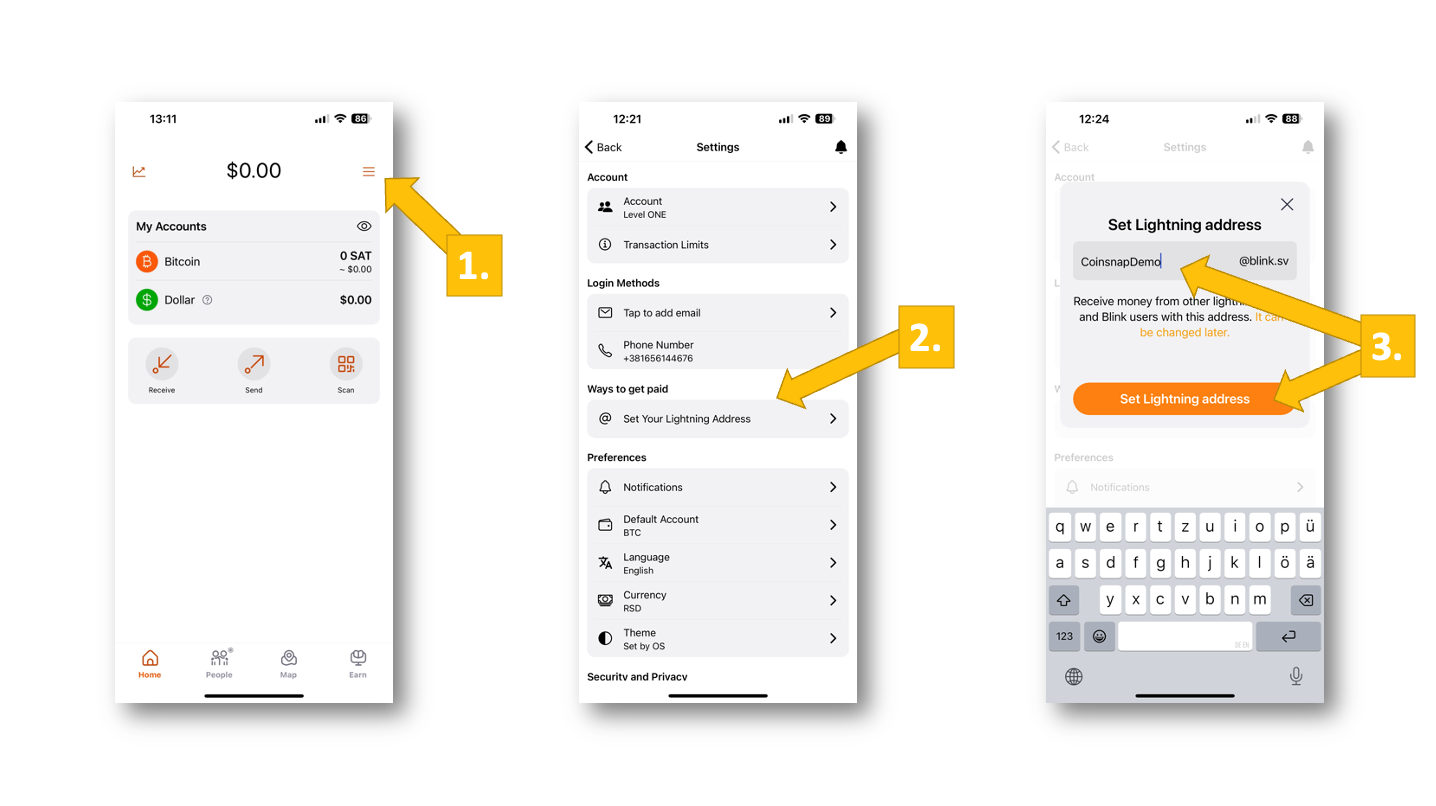
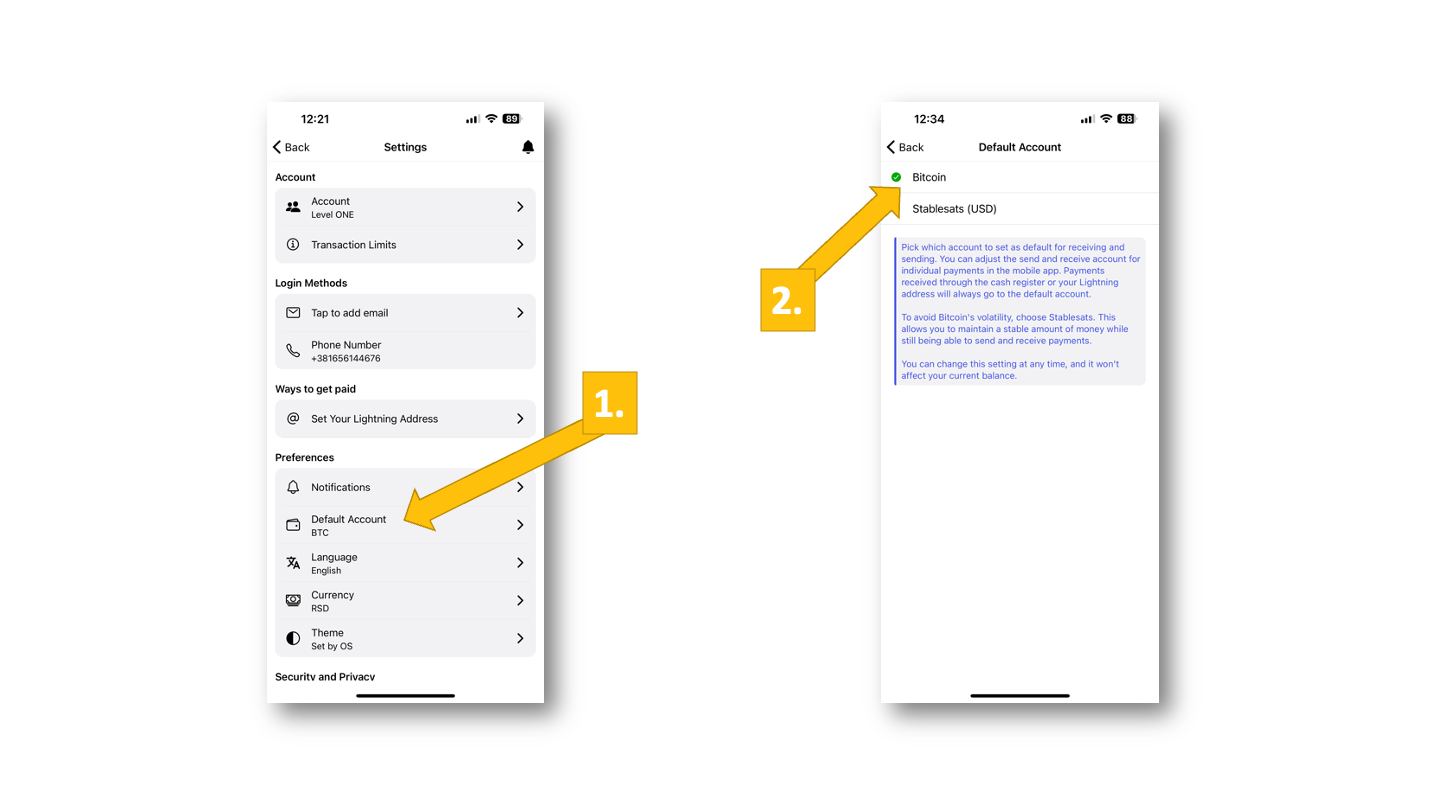


 Coinsnap provides a free installation service to help merchants integrate Bitcoin payments into Wix. Their team sets up your Coinsnap account, plugin, and wallet, verifies the setup, and ensures payments flow directly to your wallet without fiat conversion.
 The payment button allows you to sell individual products and services on your website.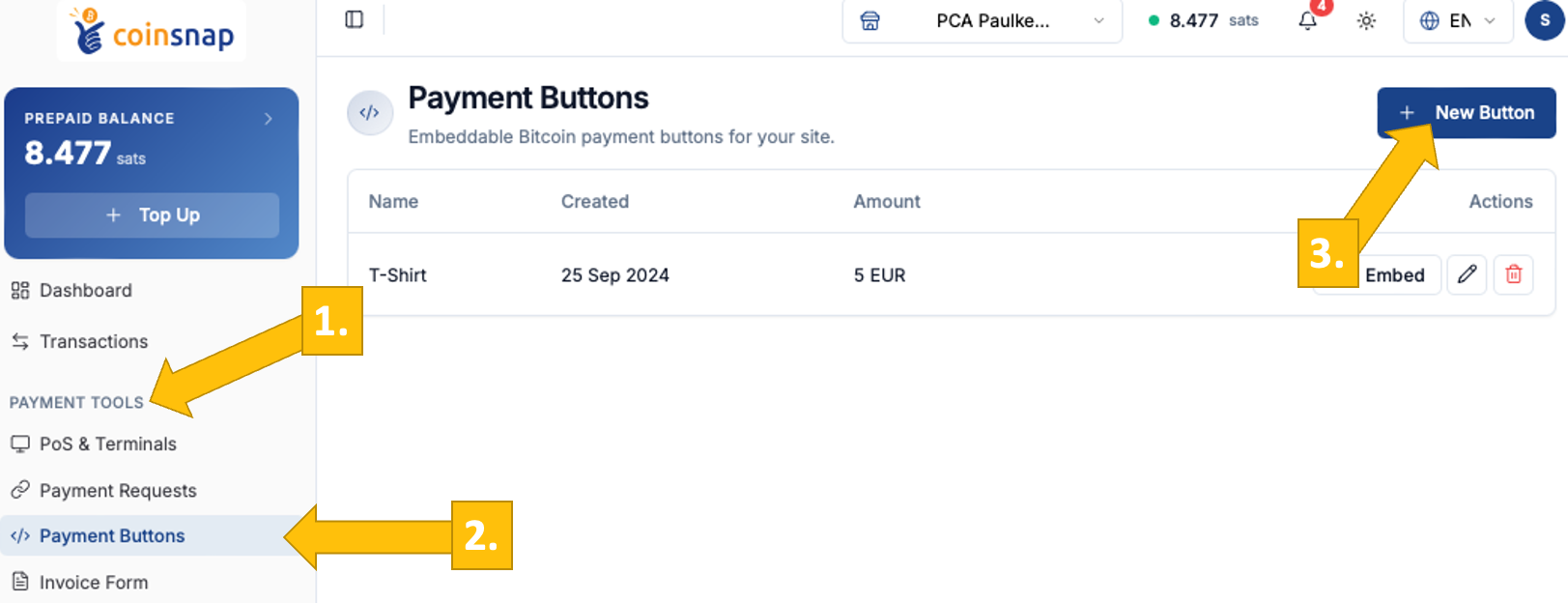
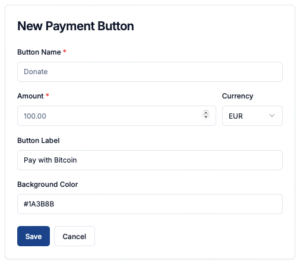 pen your Coinsnap dashboard, navigate to Payment Tools [1] → Payment Buttons [2], and click New Button [3]. You will then be taken to the New Payment Button page, where you can define the basic parameters for your Bitcoin payment button.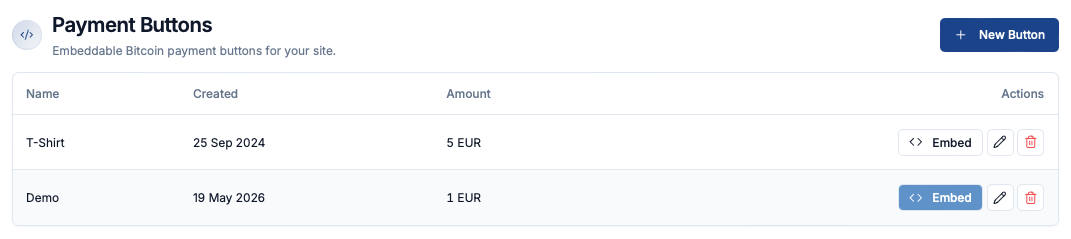
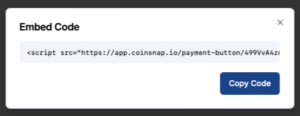 Click the Embed button on the right to open a window with the HTML embed code for your Bitcoin payment button. Click Copy Code and paste the snippet into your website where you want the button to appear.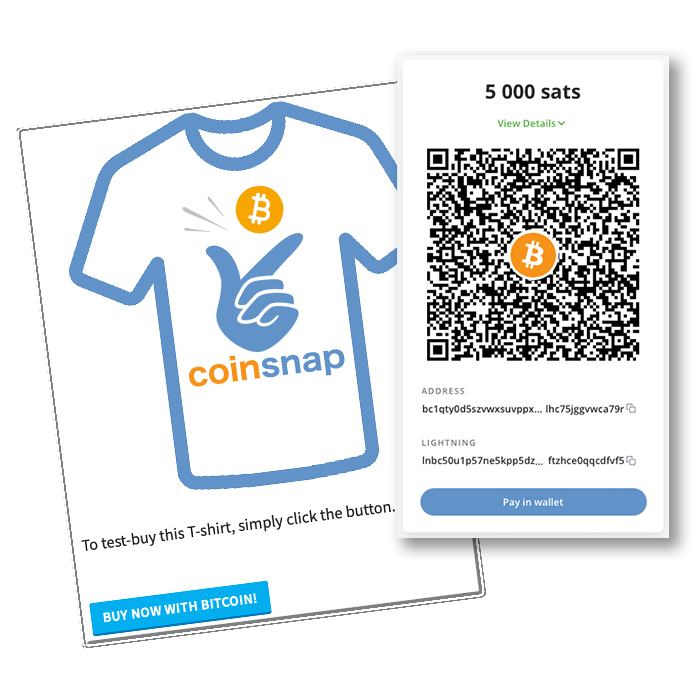
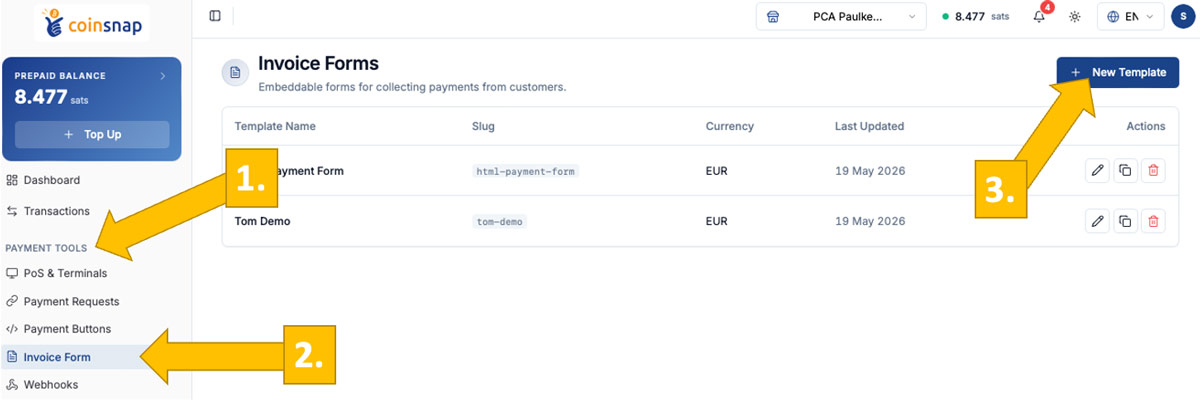
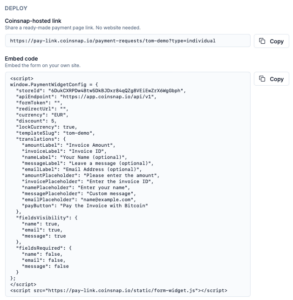 You can deploy the Bitcoin Invoice Form in two ways, depending on how you want to use it.
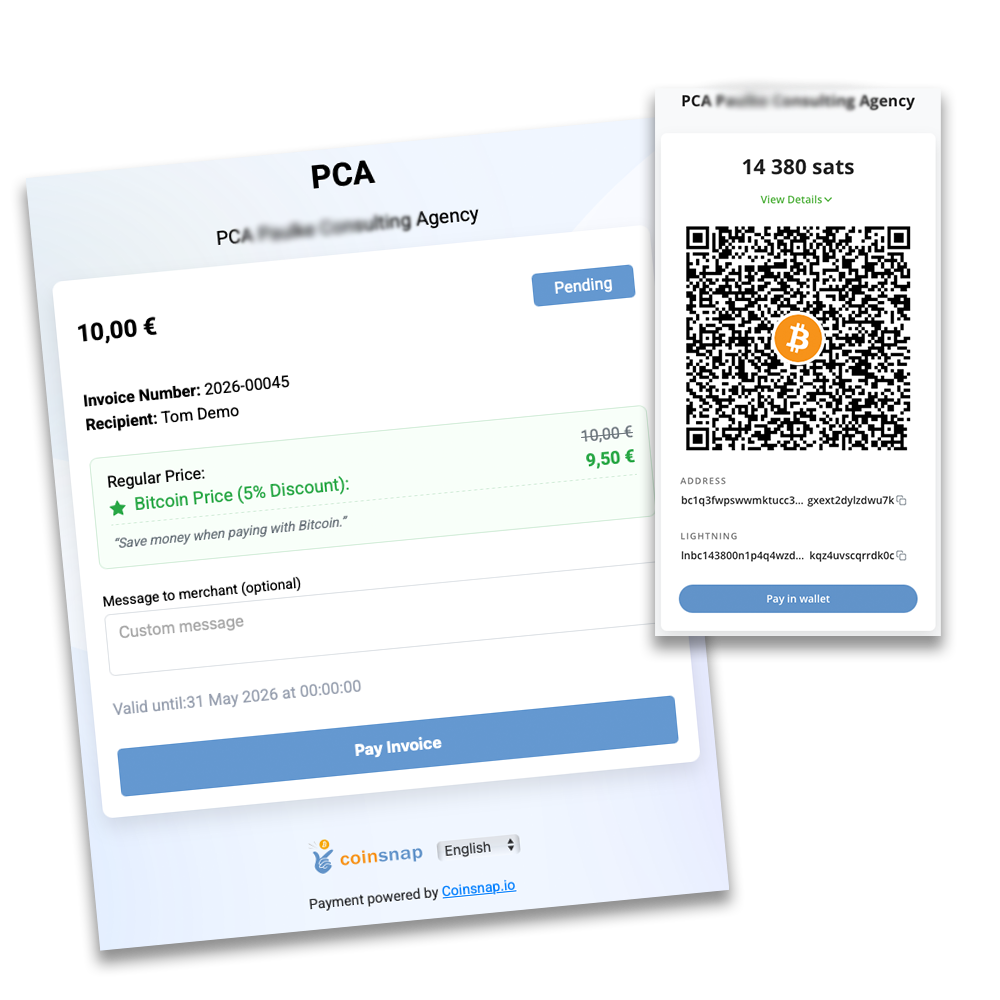
 The payment process is designed to feel familiar and requires no learning curve.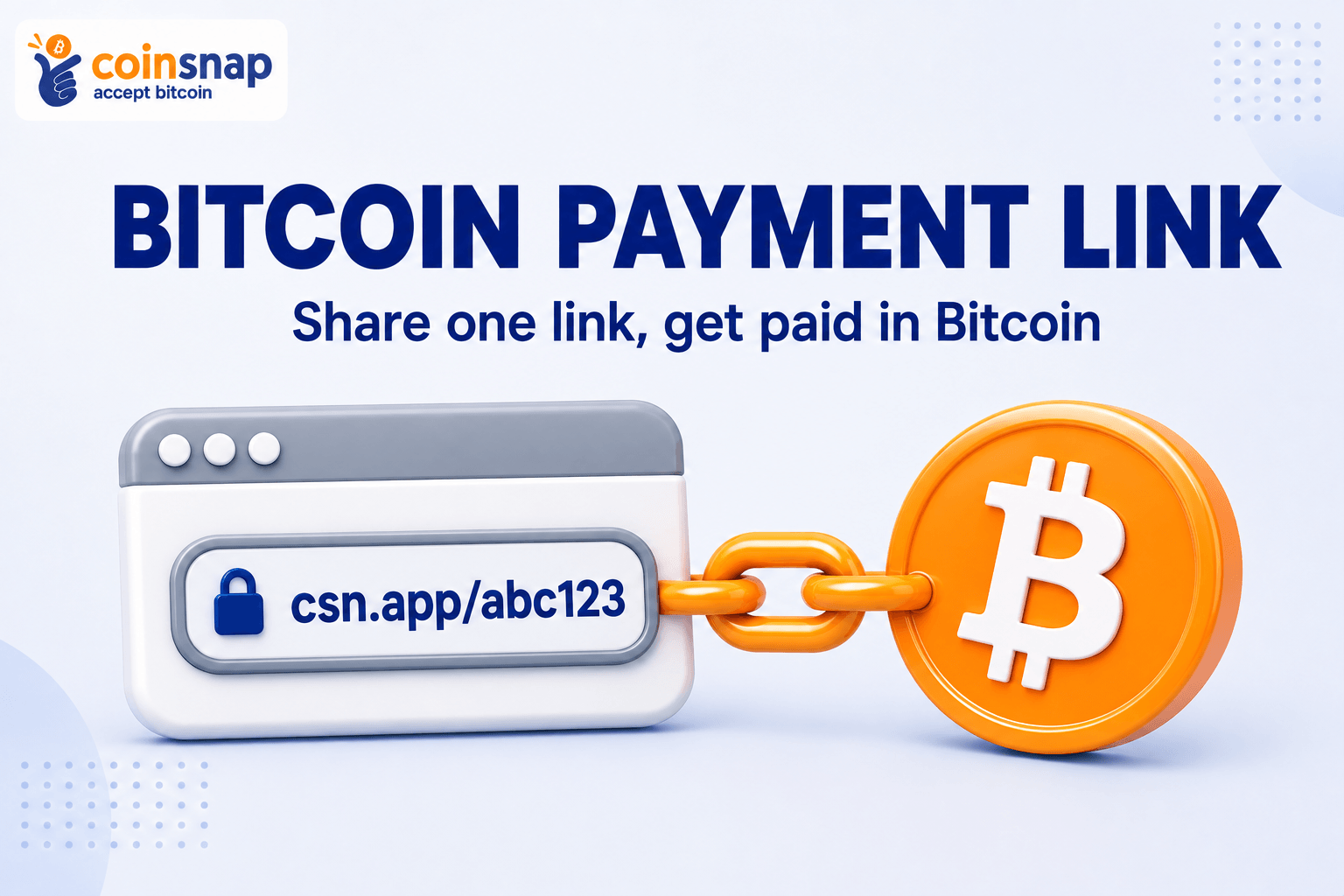

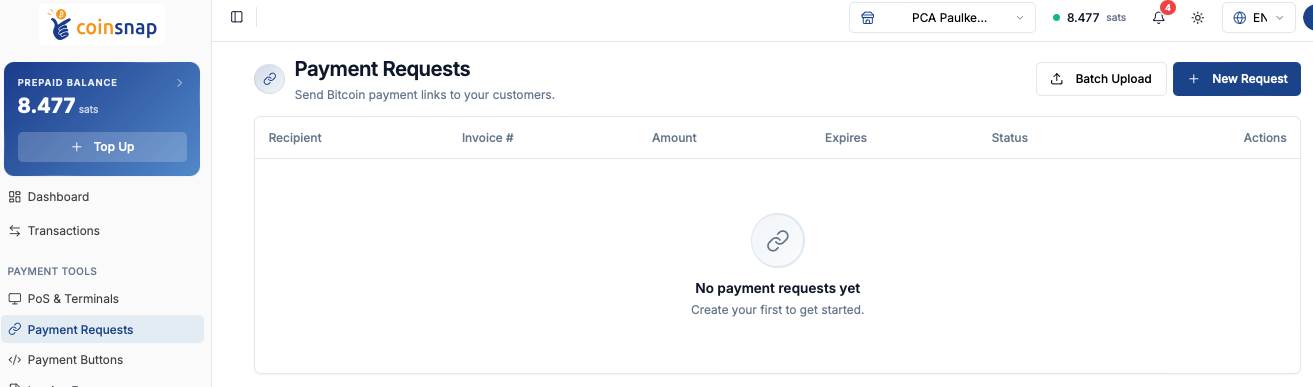
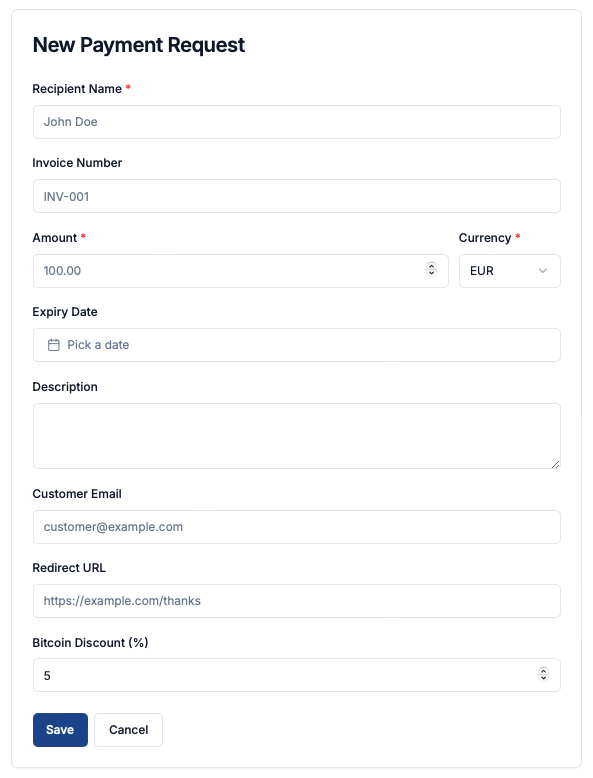

 You can copy the payment link (URL) by clicking the copy icon on the right under Actions.
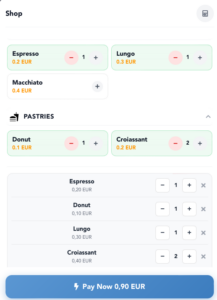 Coinsnap presents Bitcoin Point of Sale